How many fish in an aquarium? The rule to avoid overstocking
Published by Planète Pets · managing editor: Clément Lacaille · how our guides are written
The basic rule: 1 cm of adult fish per real litre of water, and half that for massive species such as the goldfish. A net 60 litres therefore hosts a shoal of 10 to 12 small 4 cm fish — not the 25 the pet shop will gladly sell you. Overstocking is the number-one cause of unstable tanks after skipped cycling.
Contents · 5 sections
How do you calculate your tank’s real capacity?
Start from the net volume, not the advertised one: a so-called 100-litre tank holds about 85 litres once the substrate, decor and fill margin are deducted. Then count each species’ adult size, not the 3 cm juvenile in the shop: a 4 cm ancistrus in the store will reach 12 to 15 cm. Finally, weight the count: stocky species and big eaters count double.
What are typical stockings by volume?
- 25 litres: a single betta, or a shrimp colony.
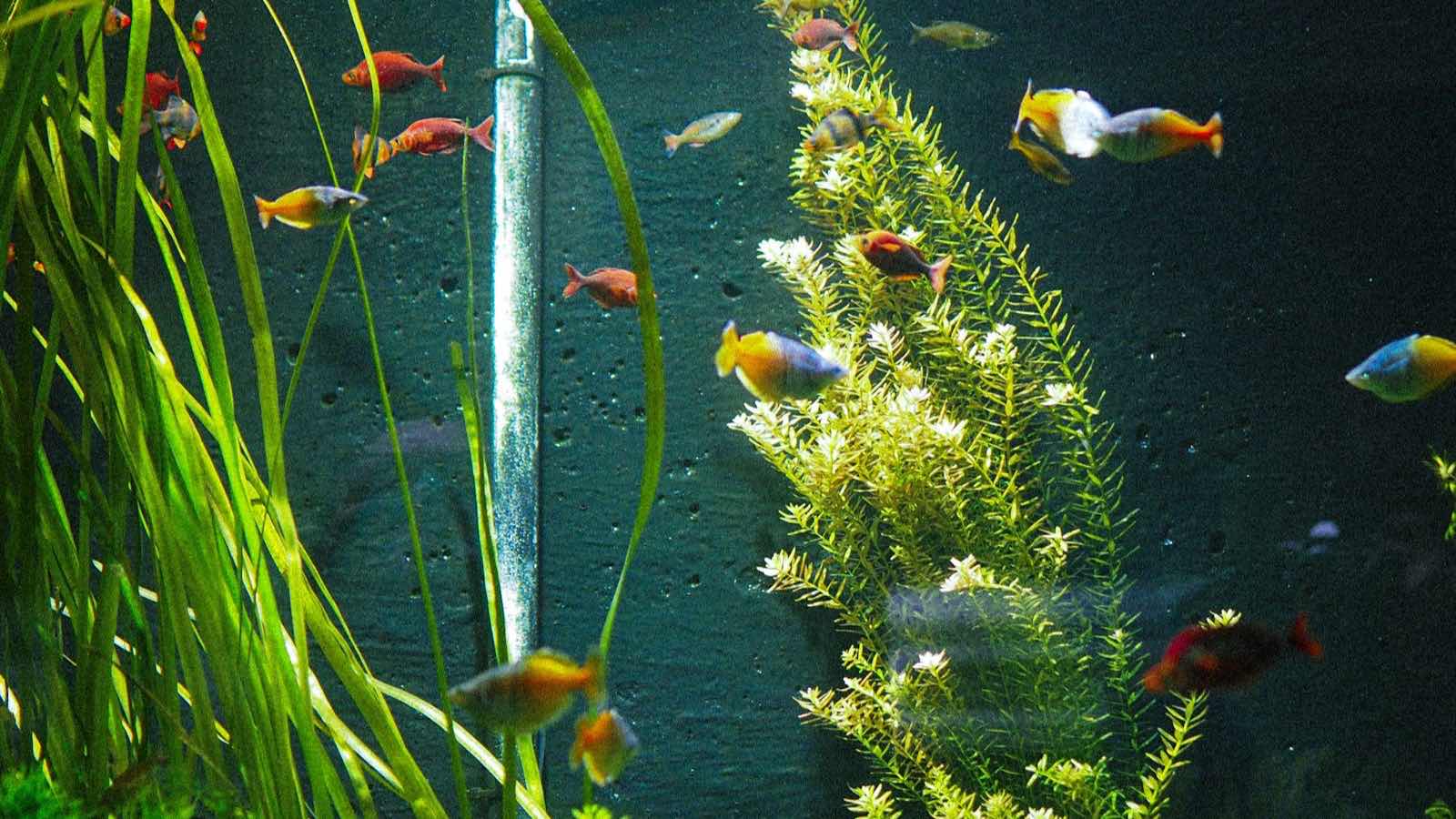
- 60 litres: 10 microrasboras or 8 neons + a few shrimp.
- 100 litres: a shoal of 12 tetras + 6 corydoras + a pair of dwarf territorial fish.
- 120 litres: two goldfish — no more, see the goldfish case.
- 240 litres: a true community across three swimming levels.
What are the signs of an overstocked aquarium?
Nitrates climbing despite water changes, fish gasping at the surface first thing, recurring algae, clamped fins and repeated illness: all symptoms of a tank producing more waste than its filtration and plants can process. The financial penalty follows: treatments at 10-20 € a bottle, doubled water changes, replaced fish. Better to prevent, like the other classic first-tank mistakes.
How can you indulge yourself without overstocking?
Favour one large shoal of a single small species over three fish from ten different species: fifteen microrasboras in 60 litres put on a coordinated swimming display far superior to a grab-bag inventory, for 30 to 45 € in total. And if the craving for more fish persists, it’s the volume you need to increase — our tanks and habitats category compares the formats.
Frequently asked questions
Does the 1 cm per litre rule apply to all fish?
No: it works for small shoaling fish. For tall-bodied, territorial or heavily polluting species, halve the capacity and research each species individually.
Do shrimp and snails count in the calculation?
Barely: their organic load is minimal. A shrimp colony adds itself almost free of charge to a reasonably stocked tank.
Does a very good filter let you keep more fish?
It delays the problems but creates neither litres nor territories: crowding stress and nitrates always end up catching up with the overstocked tank.
In our shop, for this use: Ceramic pebble hide for shrimp and small fish (€20.90) · the whole shop
This guide is part of Planète Pets’s Fishkeeping universe. Our advice is general in nature: for any health concern, your veterinarian remains the only reference.