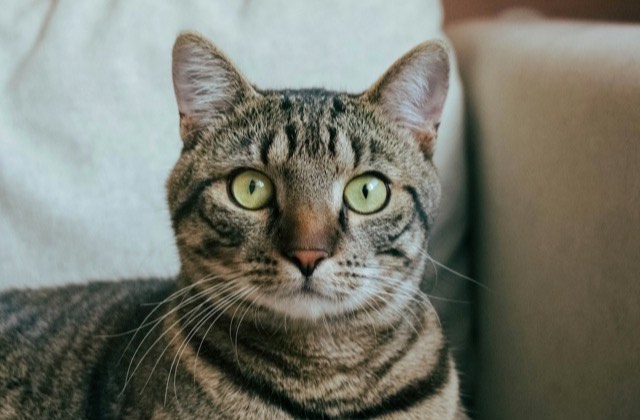
Slow-feeder bowl for cats: put an end to gulped-down meals
Published by Planète Pets · managing editor: Clément Lacaille · how our guides are written
A slow-feeder bowl for cats slows down eating thanks to maze-like ridges that force the animal to pick up its kibble piece by piece. It is the simplest solution (8 to 25 €) against post-meal vomiting, swallowed air and the constant hunger of cats that gulp their ration in under a minute.
Contents · 4 sections
Why does my cat eat too fast?
Competition with another animal, anxiety, boredom or plain greed: a cat that bolts its food swallows air and whole kibble, then often regurgitates within minutes. Slowing the meal improves digestion, extends the feeling of fullness and limits weight gain, which is common in neutered indoor cats. Watch your cat: if it empties its bowl in under two minutes and immediately begs for more, a slow-feeder bowl will change its daily life within days. If vomiting persists despite a suitable bowl, or comes with weight loss, see a vet to rule out a medical cause.
How do you choose a slow-feeder bowl for a cat?
- Rounded, well-spaced ridges sized for a cat’s muzzle (avoid dog models).
- Low walls so the whiskers are not squashed.
- Stable, safe material: ceramic or BPA-free plastic with a non-slip base.
- Easy to clean, dishwasher safe.
- Progressive difficulty levels if your cat gives up easily.
- Budget: 8 to 15 € in plastic, 15 to 25 € in ceramic.
What are the alternatives to a slow-feeder bowl?
Foraging games kill two birds with one stone: they slow the meal down and stimulate the mind. Treat balls, snuffle mats and activity boards are covered in detail in our guide to food puzzles for cats. You can also split the ration with an automatic feeder programmed for 4 to 6 micro-meals. Browse all the bowls in our cat food section.
Frequently asked questions
Does a slow-feeder bowl work with wet food?
Yes: spread the wet food into the ridges, or use a lick mat (6 to 12 €), which is very effective at slowing down wet meals.
My cat is snubbing its new bowl — what should I do?
Start with a simple model, place a few treats on it and keep the old bowl alongside for a few days.
How long should a meal last?
Aim for 5 to 10 minutes instead of 30 seconds: that is enough to eliminate most speed-related regurgitation and let your cat finish its meal relaxed, without begging straight away.
An accessory from our shop for this use: Raised-edge silicone feeding mat for cats (€25.90) · the whole shop
See it at Le Félin, a shop from the same family (zero commission): Arbre à chat design en bois naturel (from €119.99)
This guide is part of Planète Pets’s Cats universe. Our advice is general in nature: for any health concern, your veterinarian remains the only reference.