Birds and children: making cohabitation work in complete safety
Published by Planète Pets · managing editor: Clément Lacaille · how our guides are written
Cohabitation between a bird and children works very well on one condition: the parents remain the animal's primary carers. A bird is neither a toy nor a « learning pet » to hand over to a six-year-old: it is fragile (a zebra finch weighs 12 g), it bites when frightened, and its daily needs exceed a young child's consistency. Properly supervised, however, the relationship becomes a wonderful school of gentleness and responsibility.
Contents · 5 sections
From what age can a child get involved?
- Under 6: observation only, never handling; the adult does everything.
- 6-10 years: under supervision, the child fills the feeders, prepares the vegetables, offers millet through the bars.
- 10-14 years: helps with out-of-cage time and upkeep, always with an adult ultimately responsible.
- At any age: the adult guarantees care, out-of-cage time and avian vet appointments.
Which safety rules protect the bird?
A bird can be squeezed: never a full-hand grip by a child. Set simple, non-negotiable rules: no shouting near the cage, no banging on the bars, never chasing the bird in flight, only taking it out with an adult, doors and windows closed. Out-of-cage time demands the same discipline as described in the travel and safety section. Watch out too for children's toys left on the floor: small parts and rubber bands are dangerous for a curious parrot.
Which risks to the child should you know about?
A budgie's bite pinches; a large parrot's can cause serious injury: never leave a young child alone with a parrot at liberty. On the health side, psittacosis can be transmitted to humans: hand hygiene after care, regular cage cleaning, and a consultation if the bird is unwell. A veterinary check at adoption keeps everyone safe — see our guide to welcoming an adopted bird.
Which species should a family choose?
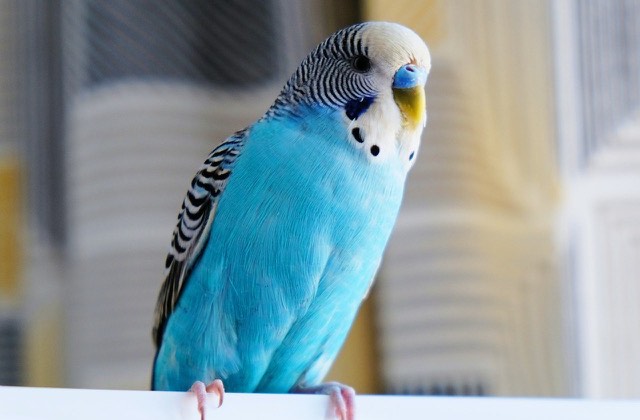
Budgerigars in pairs and cockatiels are the best family choices: (relatively) robust, diurnal, expressive — our comparison budgie or cockatiel helps you decide. Avoid large parrots with young children: beak power, possible jealousy and a lifespan of several decades make them an adult's commitment. Family start-up budget: 150 to 250 € for a fully equipped pair of budgies.
Frequently asked questions
Can a bird be given to a child for their birthday?
Give the project rather than the animal: books, a breeder visit, preparing the cage as a family — the bird arrives afterwards, chosen and awaited.
Could the bird be jealous of a new baby?
A parrot strongly bonded to one adult can take a baby's arrival badly: prepare by varying the caregivers before the birth.
What if the child loses interest after six months?
It is common and predictable: the adult remains the carer in any case; the child's interest will come back in waves, without the bird suffering for it.
In our shop, for this use: Parrot outdoor harness with elastic lead (€25.90) · the whole shop
This guide is part of Planète Pets’s Birds universe. Our advice is general in nature: for any health concern, your veterinarian remains the only reference.