What Size Aquarium Should You Start With? The Real Number (and the Fishbowl Myth)
Published by Planète Pets · managing editor: Clément Lacaille · how our guides are written
It's the first question every future aquarist asks: what size tank should I get? Counterintuitive as it may seem, a large aquarium is easier to maintain than a small one. The greater the water volume, the more stable the parameters (temperature, pollution, pH) remain. At Planète Pets, we recommend never going below 54 litres for a first community tank.
Contents · 5 sections
The myth of the goldfish in a bowl
Let's start by putting a stubborn misconception to rest: no, a goldfish does not belong in a bowl. An adult common goldfish measures 20 to 30 cm and can live for more than fifteen years. It needs at least 100 litres per individual — ideally a pond. In a bowl, its growth is stunted, the water fouls within hours and its life expectancy collapses. Several European countries have restricted the sale of fishbowls for precisely this reason.
What volume for what project?
- Under 30 litres: reserved for specialised nano tanks (shrimp, a single betta). Not recommended for a very first aquarium, as the balance is fragile.
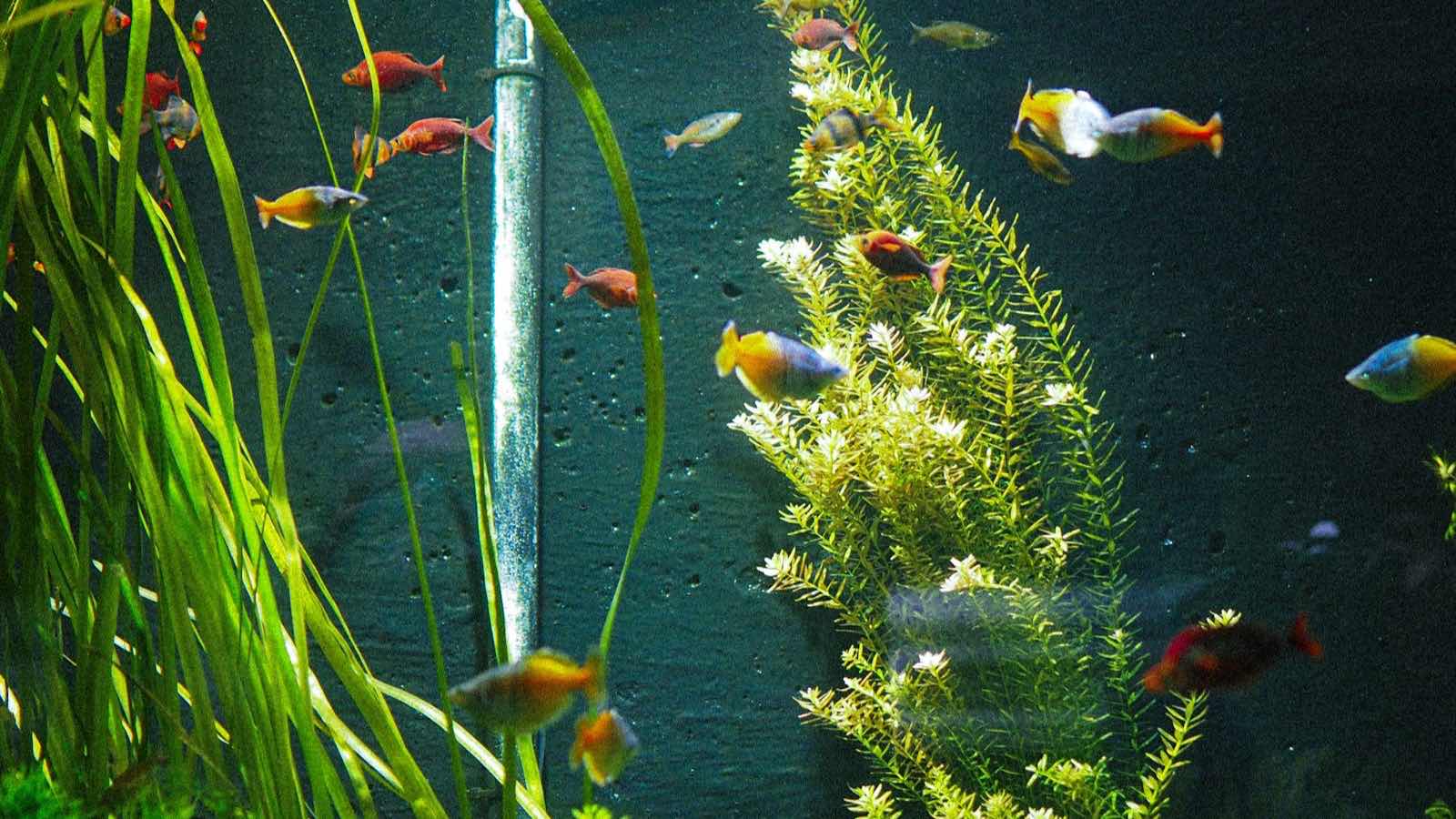
- 54 to 60 litres: the sensible entry point for a small shoal of small fish (neon tetras, rasboras). Expect to pay 80 to 150 € for an equipped kit; what to check and how to cycle it are covered in our beginner 60-litre freshwater aquarium guide.
- 100 to 120 litres: the best beginner compromise. Stable parameters and a wider choice of stocking options. Full kit budget: 150 to 300 €.
- 200 litres and up: for goldfish, angelfish or large planted tanks. Watch the weight: allow roughly 1.5 times the volume in kilos, cabinet included.
Don't forget weight and placement
A 100-litre aquarium weighs around 150 kg once filled with its substrate and decor. Place it on a cabinet designed for the purpose, away from windows (direct sunlight encourages algae) and near a power socket. Choosing the substrate happens at the same time as choosing the tank, because it determines your future planting.
The overall budget to plan for
The tank itself is only part of the investment. You'll need to add a filter matched to the volume, a heater, lighting and a water test kit. For a 100-litre setup, budget 250 to 450 € all in, fish not included. It's a real outlay, but it buys years of enjoyment with no nasty surprises.
In short
Think big from the start: a 100-litre tank forgives beginner mistakes, where a nano punishes them instantly. And if someone gives you a fishbowl, turn it into a vase. To go further, browse our other fishkeeping guides and our selection of essential accessories.
In our shop, for this use: Hollow moss-effect resin log for aquariums (€20.90) · the whole shop
This guide is part of Planète Pets’s Fishkeeping universe. Our advice is general in nature: for any health concern, your veterinarian remains the only reference.